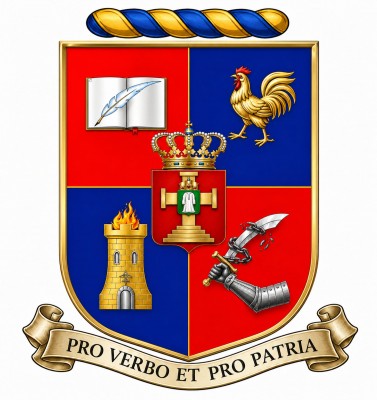
Biography of Gaioz (Gia) Mamaladze Speaker of The Royal Club of Georgia Gaioz (Gia) Mamaladze was born on March 6, 1964, in Tbilisi, Georgia. He is a publicist, philologist, historian, politician, and one of the main ideologists of contemporary Georgian national ideology - encompassing nationalism, popular monarchy, traditionalism, and conservatism. In 1980, together with friends Gia Bumbiashvili and Jumber Tadiashvili, he co-founded the clandestine political group “NAMO” - Nationalist-Anarchist Workers’ Organization. He studied Old Georgian Literature at the Faculty of Philology of Tbilisi State University, and later Art History at TSU’s second faculty. He was actively involved in the student and national liberation movement. He served as Chairman of the Student-Youth Subcommittee of the Commission Investigating the Crimes Committed by the Soviet Army in Tbilisi on April 9, 1989. In 1991 he was elected a member of the Didube District Council of Tbilisi Municipality. That same year he co-founded the political organization Union for Georgian Renaissance. In 1992 he co-founded the Iberian-Caucasian Movement – National Front and the National Union of Georgian Students (NUGU). Since 1992 he has led Georgian Unity – Uniен of Georgian Nationalists. With colleagues he also founded the Center for Geopolitical Modeling. He researches and develops key concepts of modern Georgian ideology: Modern Georgian nationalism, constitutional popular monarchy, traditionalism, Christian-social ideology, and Iberian-Caucasian unity. He is the author of several new political-ideological terms used in Georgian discourse, including “North Kartli,” “All Georgia,” “Popular Monarchy,” “Horizontal Monarchy,” and others. Mr. Mamaladze has served as editor of ideological and publicist supplements for several newspapers and has contributed to numerous online publications on literature, history, ideology, and contemporary music. In 2004, on his initiative, The Royal (Monarchist) Club of Georgia was established, where he was elected Speaker. Between 2006-2007 he hosted the author’s radio program “For Popular Monarchy” on the Patriarchate of Georgia’s Radio “Iveria.” He is the author of multiple books, including: For a Constitutional Popular Monarchy (2007); The Prophecy of Greek Monk Kirile Lavriotis on Georgia (2010); and several e-books published in 2026 including: David the Builder – Sun of All Kings, The Secret, Sacred, and Encoded Information and Analogies in Sumbat Davitis dze’s Chronicle – “The Life and Deeds of the Bagrationi” (Third Edition, 2026) Fundamental Principles for the Constitution of the Georgian Popular Constitutional Parliamentary Royal Kingdom (2026) Constitutional Popular Horizontal Democratic Parliamentary Republican Monarchy (A Crowned Democratic Republic) (Second Edition, 2026) Several Essays and Memoirs on Zviad Gamsakhurdia (2026) With Levan Beraia – _The Metreveli: History of an Ancient Georgian Family_ (2026) In 2007, he produced the historical-documentary film The Beginning of Return (Author, Editor), which recounts the story of the repressions against the head family of the Bagration-Mukhrani dynasty in the Soviet Union, their forced emigration, their kinship with European royal houses, and their return to the homeland. In 2008, the film received a certificate at the Batumi International Orthodox Film Festival "St. Andrew the First-Called" - "The Cross of St. Andrew." G. Mamaladze was personally awarded a personal certificate. He is the founder and editor of the Royal Club’s website , the YouTube channel @RoyalClubofGeorgiaTV, and several other blogs. He also leads a history column in Tbiliselebi magazine. Gaioz Mamaladze is married to Nato Giorgadze and they have a daughter, Nona. Major Works of Gaioz (Gia) Mamaladze Ideology & Political Thought Georgia Must Again Become the Sun of the Caucasus (1992) The Georgian Nationalist Movement: Foundations, Principles, Goals and Objectives (1992) All Georgia The Necessity of a Contemporary National Ideology Confession and Georgian Nationalism / The Formula of Unity Integral Nationalism and the Theory of Aristocracy Akaki Bakradze and the Forgotten Idea Georgians... Non-Georgians, or Let Us Use the Georgian-Jewish Example Vertical and Horizontal Postulates of National Ideology (Fatherland, Language, Faith + Nation, Clan, Family) Eternal Government Isaiah Berlin on Herder’s Idea of Nations, Nationalism, and Georgian Poets For a Popular Monarchy A Popular Constitutional Republican Monarchy GO HOME "Princes!!!" The "Architectural Ideology" of the Period of Georgian Unification Russia Is Not the Third Rome North Kartli (and not South Ossetia) Hagiography – The Foundation of National Ideology The Anti-Russian Nature of Historical Russian Anti-Georgian Policy Who Took the "First Step" Toward a Constitutional Popular Monarchy Why the European Choice?! (from the Royal Club conference: Popular Monarchy – The European Choice) “O, My Language...” On Mother Tongue (State Language) Day Trebizond and Lazeti – Part of Georgian History and Culture The Royal City and Royal Cathedral – Bana and others. Historical publications Tubal Who Could Have Been the Ancestors of King Parnavaz and What Positions Did They Hold in the Achaemenid and Alexander the Great’s Empires What Kinship Ties King Parnavaz May Have Had with Alexander the Great’s Son and the Diadochi Which State(s) Was the Kingdom of Azo and Parnavaz a Continuation The Ethnicity of Saint King Mirian Ioane Mtatsmindeli’s Aspiration to Seek Allies and Relatives in the West National-Political Formulas That Laid the Foundation for the Unification of the Country and the Person During Whose Reign Those Political Formulas Began to Be Implemented Heir to Three Kingdoms, Two Dynasties, and Seven Thrones The Share of Egrisi The "Architectural Ideology" of the Period of Georgian Unification The Ethnic Identity of the Bagrationi What Was Fabricated About Bagrat IV to Discredit and Overthrow Him in the Christian World How Mariam, Daughter of Gurandukht, Sister of Bagrat IV, Twice Served Georgia A Symphony of Religious and Secular Governments in Georgia The Political Goal of the First Part of David the Builder’s Monetary Reform The Probable Reasons for the Visit of the King of Jerusalem to David the Builder Tbilisi – The Metropolis of the Caucasus and Its Significance for David the Builder The Reasons for the Fierce Resistance by Tbilisi Muslims and Their Allies Against David the Builder The Wish That David the Builder Could Not Fulfill The Meaning of David the Builder’s Territorial Formula: “From Nikopsia to Derbent...” Why David the Builder Humbly Considered That He Had Broken the Tenth Commandment Armenians Hated Byzantines and Crusaders, But They Loved David the Builder Information in One Masterpiece of Old Georgian Poetry About David IV’s Merits and the Epithet "the Builder" Did David the Builder’s Contemporaries Love Him The Foundations of David the Builder’s Victories The Portrait Depiction of David the Builder from the Icon of St. George in a Monastery on Mount Sinai What the "Comparison" of Queen Tamar and Her Mother to the Theotokos Meant Ingush Traditions About Queen Tamar The Georgian Kingdom and the Commonwealth of the Caucasus in the 12th Century (with map) Why Tamar’s Marriage to a Rus’ Prince Was Decided Georgia Was Preparing to Become the Third Rome Was the Founding of the Empire of Trebizond by Georgians a Mistake Queen Tamar’s Name in the Contemporary World and the Legend of Her and Her Son’s Exceptionality The Brilliant Name of Queen Tamar Among the Constellation of Famous Rulers “The Joy of the Georgians Has Dimmed” Why Queen Tamar’s Name Overshadowed the Names of Preceding and Subsequent Kings in Georgian Folklore Two Versions of the Origin of the Mamaladze Surname, Information on the Old Name of the Village of Khevi, Several Traditions About Bughara Mamaladze and Other Mamaladzes Why Austrians Recorded Georgian Folklore Samples During World War I and How a German Girl Saved Four Georgian Prisoners from Execution and others. Sacred Topics Related to Georgia Orthodox Sacred Geopolitics in Georgia in the 5th–6th Centuries King Vakhtang Gorgasali’s Dream, Its Interpretation and Consequences Two Special Manifestations of Sacred Policy (the Will of Providence) in 10th Century Georgia Georgia is the “New Israel” (the Chosen People), Russia is the “New Egypt” (the Prison of Nations) The Robe of the Lord (and Jacob’s Ladder) in Mtskheta The Mystery of David the Builder’s Tomb The Georgian Nation – God’s Chosen People The Prophecy of the Greek Monk, Kirile Lavriotis, on Georgia “All Mysteries Are Buried in This Language: Yeshua Was Born” De Castelli on the Bagrationi’s Kinship with Christ The Significance of Gregory of Nazianzus’s Revelation in the Establishment of the Autocephaly of the Georgian Church A Sacred Manifestation of Orthodox Geopolitics – the Autocephaly of the Ukrainian Church: An Answer to Abkhazia, North Kartli, and Crimea and others. Essays Zviadism The Mystery of Zviad Continues The Man Who Comes Back Ilia, David, Zviad, and National Ideology The Lord of the Colchian Tower-Fortress To Gocha Esebua To Isa Koazoi and others. Legitimism Changes of Royal surnames in European Dynasties, or How the Georgian Dynasty Differs from the European The Lord's Promise to the House of David (Jesuian, Davitian, Solomonian, Bagrationi) House, or the Principle of Royal Legitimacy of the Old and New Testaments Was the Patriarch’s Idea the Intermarriage of Representatives of Different Branches of the Bagrationi George III Feared for His Legitimacy and Therefore Punished Demna with an Exceptional Punishment The Various Branches of the Bagrationi Have Not Lost Their Royal Dignity From Which Branch and of What Lineage Should the Future King of Geo rgia Be “The Lion’s Cub Is Proper, Whether Female or Male” – Principles of Royal Legitimacy in “The Knight in the Panther’s Skin” Principles of Georgian Royal Legitimacy in the Constitution David Batonishvili (Regent) on the Rule of Legitimacy Lasha-George (The War with the Mongols and the Significance of the Testament for the Issue of Legitimacy) “The Lion’s Cub Is Proper”... But Not Next to a Wolf’s Cub Dynastic Marriage in Georgia The Formula for the Unification of the Dynasty and others. Art The Thirst for Life Kramskoi’s “Christ in the Wilderness” The Great Monumentalist Elguja Amashukeli and others. Literature Some Reasons for the Armenization of Georgians According to Daniel Chonkadze’s “Surami Fortress” David Guramishvili’s Magnificent “Lament for Jesus” Mark Twain’s “Adventures” “O Captain! My Captain!” (Or, Despite the Abundance of Oikophobes, No One Can Accuse Us of Racism) King Demetre’s Iambics Mikheil Javakhishvili Boldly Created Works for Which the Oppressors Could Have Shot Him Robert Burns’ “My Father Was a Farmer to His Trade…” Jules Verne – The Eternal Traveler… The “Periodic Comet” of World Literature On the Day of Mukhran Machavariani’s Death Levan Gotua – “The Chronicler of Speri” What’s the News in Tamarasheni? (Ivane Machabeli) Knut Hamsun, Who Transcended into Mysteries Nikoloz Baratashvili’s “Merani” – The Ideology of Self-Sacrificing Georgians Friedrich Schiller’s “The Veiled Image at Sais” More Light for Goethe The Day of the Death of the Author of Truly Alive Poems, Unlike Some Pseudo-Writers and Pseudo-Politicians The Great Georgian Writer Iakob Khutsesi The Ever-Relevant Poem of the Ever-Relevant Creator, Konstantine Gamsakhurdia – “Paris 1919” “They Have Crowns Slightly Alike” (Konstantine and Galaktion) The Great Writer and Patriot Arthur Conan Doyle Two Versions of Sergei Yesenin’s Death (“Who Am I? What Am I?”) Shalva Karmeli’s “Self-Portrait in Profile”: “1919, Konstantine Gamsakhurdia in Europe” Merab Kostava’s Prophetic “Titan of Sufferings” (to Dostoevsky) The French Writer – Marquis de Custine on Russia Paolo Iashvili – “Before the People I Will Always Be Right” and others. Music 30,000 Greeting Cards for George Harrison George Harrison’s “Remarkable Musical and Spiritual Journey” Ringo – The Good Boy from Liverpool The Great Composer Alexander Basilaia September 25, 1980… The Death of Bonzo – The End of LED ZEPPELIN? Or the Four Elements of the Musical World of LED ZEPPELIN “Whole Lotta Love” John Lennon – A True Friend “Yesterday” – A Melody from a Dream “Hey, Julian, Don’t Be Afraid, You’ll Be Fine!” Keith Richards’ Song from a Dream and others. He has published poems and short stories. Two of Gia Mamaladze’s poems – “A Poem Will Kiss You” and “You Are a Vineyard” – are included in the Anthology of Georgian Youth Poetry (Book I, 1993). Songs have been composed to several of his poems, mainly children’s poems. |